Why These Matter Media Logo
Dolly Parton, Philanthropy and the Difference Between Generosity, Identity and Performance

Dolly Parton, Philanthropy and the Difference Between Generosity, Identity and Performance

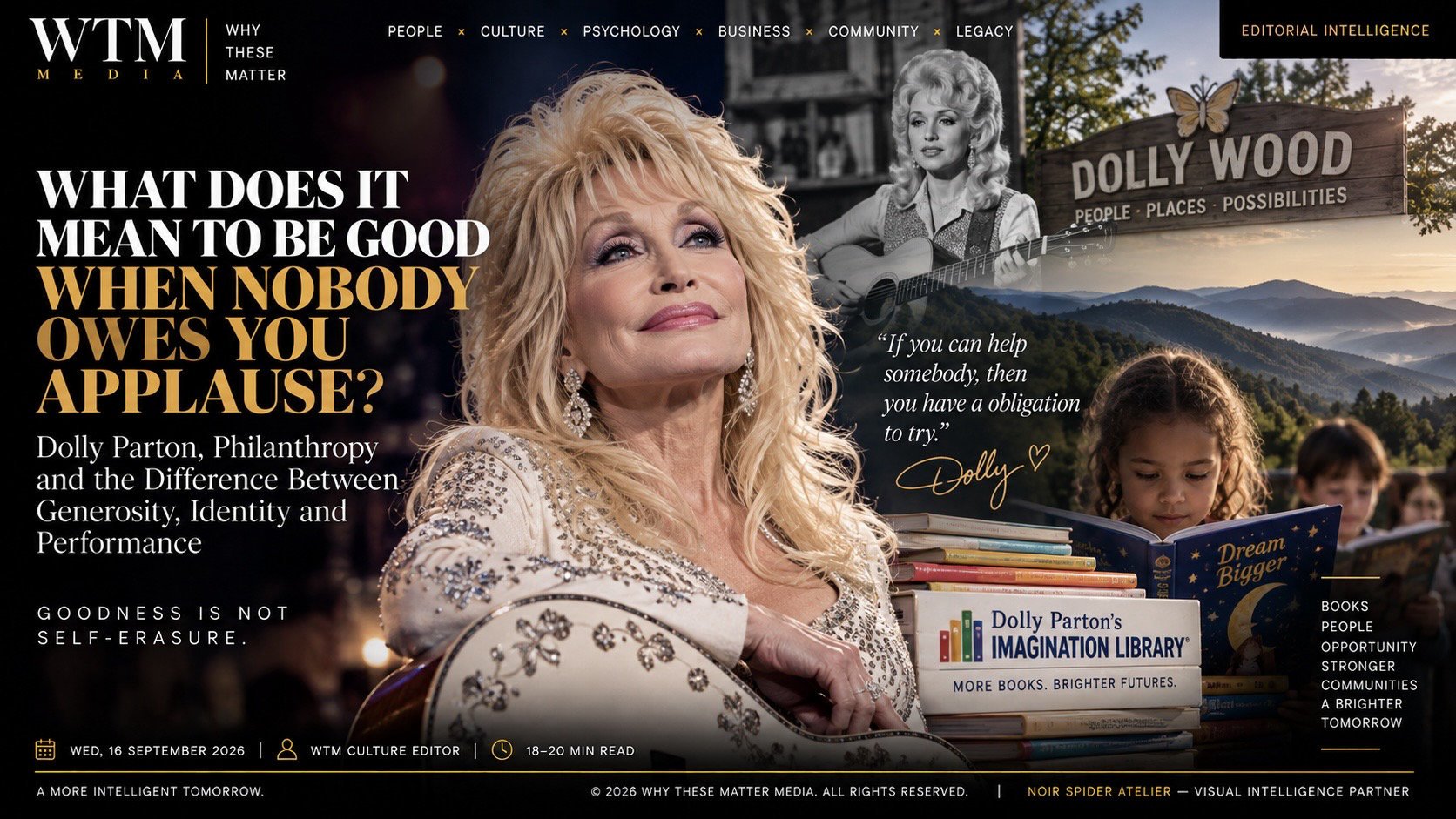
Dolly Parton died on 25 August 2026 at 80, leaving behind the obvious architecture of celebrity: songs, films, costumes, awards, businesses and an image recognisable across generations. Her official organisation described a seven-decade career and a legacy of philanthropy, compassion and resilience. But the more consequential inheritance may be found somewhere less glamorous. By June 2026, Dolly Parton’s Imagination Library was sending more than 3.5 million books a month to children across five countries and had distributed more than 325 million since the programme began in 1995. It started not as an abstract exercise in benevolence but from something personal: her father could not read or write. That distinction matters. We often describe goodness as though it requires the gradual disappearance of the self. Give more. Need less. Accommodate everyone. Remain available. Forgive endlessly. Never appear selfish. Under this model, goodness becomes a performance of personal depletion. But sustainable generosity requires almost the opposite. A person must possess enough self-knowledge to understand what they can give, enough boundaries to preserve the capacity from which giving occurs and enough judgement to distinguish helping someone from becoming responsible for their life. Parton offers a useful case study because her philanthropy did not require the destruction of her ambition, commercial instincts, aesthetic identity or ownership. She became extraordinarily successful and constructed mechanisms through which portions of that success could create value elsewhere. The mature architecture of goodness may therefore be: SELF → CAPACITY → RESPONSIBILITY → GENEROSITY → BOUNDARY → LEGACY. The question is not how much of yourself you can give away. It is whether what remains after you give is strong enough to keep generating value.

Trending Intelligence

How David Beckham Changed American Soccer and Redefined the Business of Sport

How David Beckham Changed American Soccer and Redefined the Business of Sport

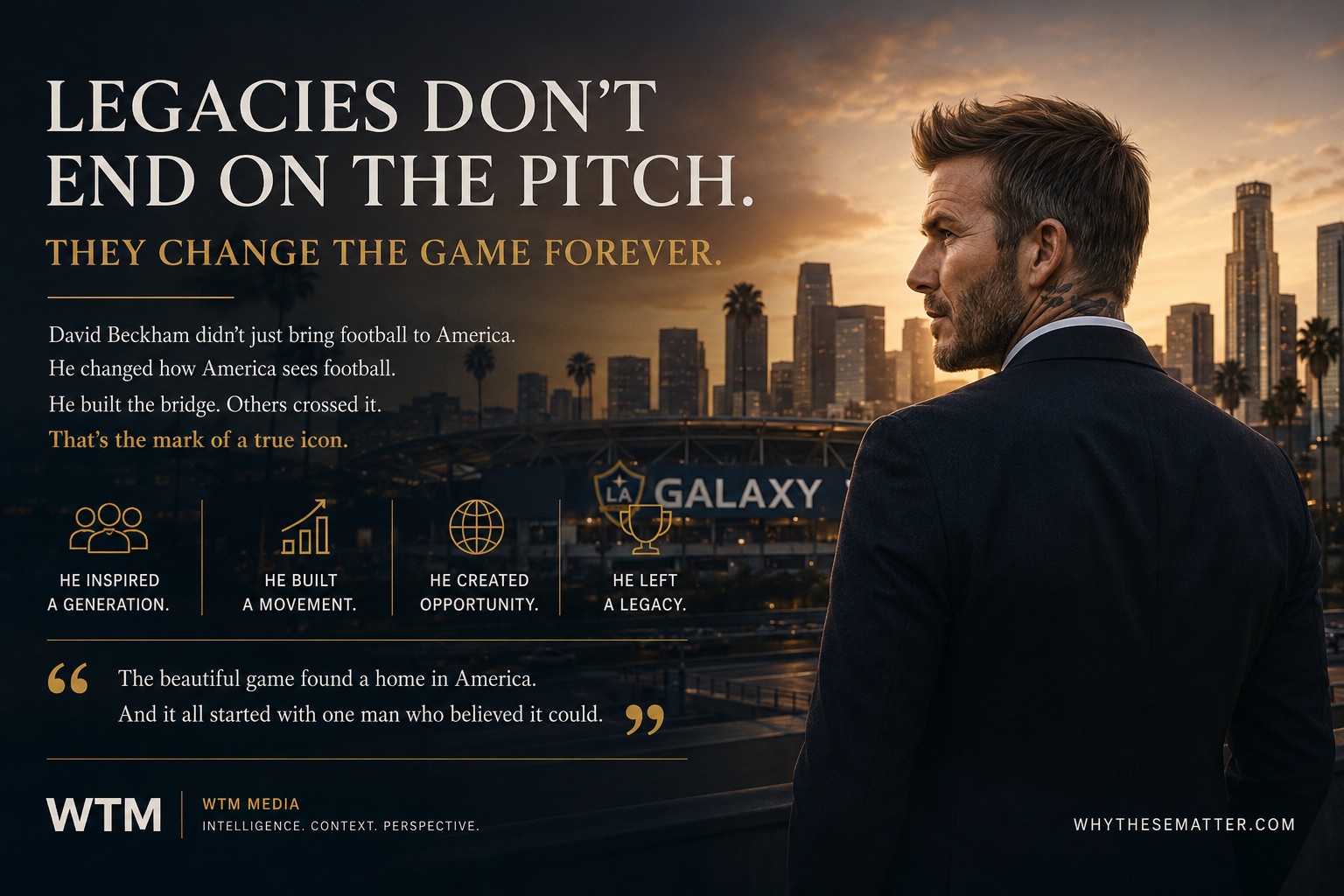
Most people believe David Beckham changed football in America because he was a great footballer. They are only partially correct. His greatest contribution had little to do with goals, trophies, or free kicks. Beckham helped redesign how America perceived the world’s most popular sport. His arrival accelerated investment, attracted international attention, reshaped Major League Soccer’s commercial strategy, encouraged youth participation, and demonstrated that culture can cross borders when trust arrives before the product. This is not simply the story of one athlete. It is a lesson in leadership, branding, economics, psychology, and institutional strategy. Every business seeking to enter a new market can learn from what Beckham accomplished without ever intending to become a case study in global systems thinking.

The Devil Wears Prada 2 and the Architecture of Institutional Survival

The Devil Wears Prada 2 and the Architecture of Institutional Survival

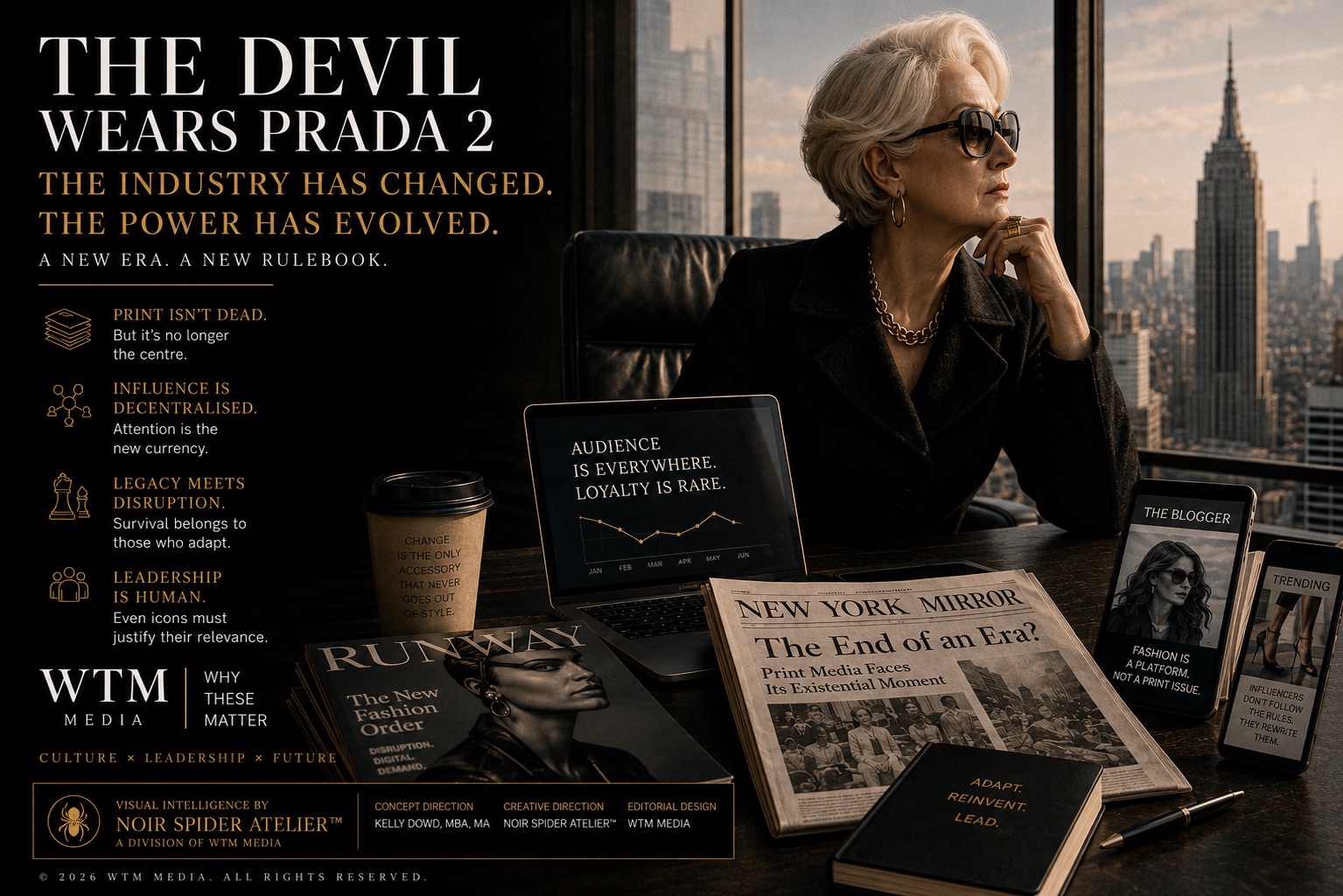
Twenty years after The Devil Wears Prada became one of the defining cultural films of the early twenty-first century, its sequel arrives with a noticeably different ambition. Rather than attempting to recreate the sharp glamour and quotable brilliance of the original, The Devil Wears Prada 2 examines what happens when an institution built for one era must survive another. Critics and audiences broadly agree that while the sequel lacks a cultural moment comparable to Miranda Priestly’s famous cerulean monologue, it succeeds by shifting the conversation from personal ambition to organisational adaptation. The film’s strongest contribution is not fashion, nostalgia or celebrity. It is its quiet recognition that industries age in much the same way people do. Print journalism confronts digital platforms. Hierarchical leadership collides with collaborative workplaces. Authority becomes accountable to governance. Influence competes with algorithms. The result is a story that reflects a broader transformation occurring across media, business and society. What appears to be a sequel about fashion is, in reality, an examination of institutional resilience in an era of accelerating disruption.

The Last Investment

The Last Investment

For centuries, civilisation has measured wealth by accumulation. Net worth rankings, stock portfolios, market capitalisation and billionaire lists dominate headlines because they are easy to quantify. Yet the largest economic question begins only after wealth has already been created: what should happen next? Modern philanthropy has entered a remarkable period of experimentation. Figures such as MacKenzie Scott, Warren Buffett and Bill Gates have redirected enormous fortunes toward education, healthcare, scientific research and community organisations. Their approaches differ, but together they raise a deeper systems question that extends beyond individual generosity: is wealth ultimately designed to be owned, or to circulate? The answer reaches far beyond billionaires. It influences governments, families, entrepreneurs, investors and every individual who hopes to leave the world marginally better than they found it. Giving is not simply an emotional act. It is a form of capital allocation capable of shaping institutions, incentives, innovation and future generations. Understanding how generosity works may therefore become one of the most valuable forms of economic intelligence.

More Intelligence

More Intelligence That Matters

Join WTM Media Support Circle

WTM Media is independently funded and reader-supported. Contributions help sustain rigorous journalism, editorial research, interviews, and long-form analysis across design, systems, governance, technology, and culture.

Support Independent Journalism